As of September 2026, 1,015 published research papers have used NOKOV motion capture systems, including 617 papers indexed in SCI or EI.
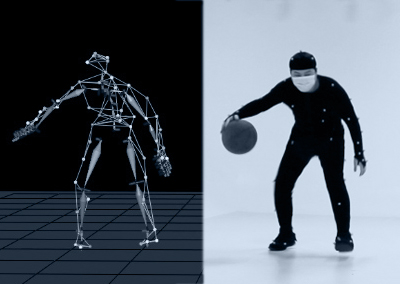
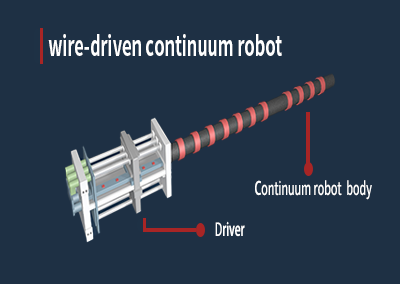
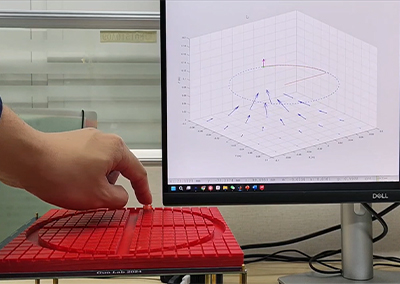
Most of these studies are in robotics and engineering, covering embodied AI, humanoid robots, teleoperation, soft robot, medical robotics, underwater robot, motion and path planning, autonomous driving, and intelligent transportation. The collection also includes research in life sciences, virtual reality, and media and entertainment.
Choosing research equipment depends on the specific requirements of an experiment. Specifications such as accuracy, sampling rate, and capture distance describe a motion capture system’s technical performance, while published papers provide another kind of information: what research problems and experimental scenarios the system has already been used for. These papers also show what was measured, what data was collected, and how motion capture contributed to each experiment.
By collecting these published studies, we aim to provide researchers with application references that are as concrete, complete, and grounded in real research as possible, connecting product specifications with actual scientific use and providing additional evidence for evaluating a motion capture system.
This is why NOKOV motion capture continues to maintain and update this research publication collection.
More Than 1,000 Papers Documenting Real Research Applications
Among the 1,015 papers currently collected, 617 are indexed in SCI or EI.
The collection includes:
Science Robotics: 3 papers
Nature portfolio journals: 4 papers
The International Journal of Robotics Research (IJRR): 3 papers
IEEE Transactions on Robotics (IEEE T-RO): 10 papers
Robotics: Science and Systems (RSS): 2 papers
IEEE International Conference on Robotics and Automation (ICRA): 26 papers
IEEE/RSJ International Conference on Intelligent Robots and Systems (IROS): 50 papers
These papers come from different research teams and cover a wide range of research subjects, topics, and experimental tasks. Together, they document how NOKOV motion capture systems have been used across different research settings.
Beyond the publication count, each individual study provides more specific information: what needed to be measured, what motion capture data was collected, and how that data was used for analysis, control, or validation.
Several representative studies illustrate how NOKOV motion capture is used in different experimental tasks.
In 2026, Prof. Mingguo Zhao’s team at Tsinghua University published “Learning vision-driven reactive soccer skills for humanoid robots” in Science Robotics. The researchers developed a unified vision-driven reinforcement learning controller that enables a humanoid robot to continuously locate, approach, and kick a ball in multiple directions using onboard vision. NOKOV motion capture was used to obtain ground-truth positions of the robot and the ball and to record kicking motion data, supporting virtual perception modeling, visual perception error analysis, and evaluation of robot localization accuracy.
View the paper: Learning vision-driven reactive soccer skills for humanoid robots
In 2026, Prof. Fei Gao’s team at Zhejiang University published “Precise aggressive aerial maneuvers with sensorimotor policies” in Science Robotics. The study demonstrated high-speed quadrotor flight through tilted narrow gaps using onboard vision and proprioceptive sensing. During experimental validation, NOKOV motion capture provided high-accuracy state data for UAV pose estimation and virtual-gap generation in hardware-in-the-loop testing, full-state feedback in baseline closed-loop control experiments, and ground-truth trajectory recording for performance evaluation.
View the paper: Precise aggressive aerial maneuvers with sensorimotor policies
In 2024, Prof. Yi Zhou’s team at Hunan University presented “Event-based Visual Inertial Velometer” at Robotics: Science and Systems (RSS). The researchers proposed a map-free visual-inertial velocity estimation method based on an event camera and IMU for real-time linear velocity estimation during aggressive UAV motion. In real-world experiments, NOKOV motion capture acquired the 6-DoF pose of the event camera at 200 Hz, providing ground truth for evaluating the accuracy of the proposed velocity estimation method.
View the paper: Event-based Visual Inertial Velometer
NOKOV Motion Capture Is Widely Used in Robotics and Engineering Research
Robotics and engineering account for a large proportion of the papers currently included in the collection.
Motion capture is used differently across robotics experiments.
In UAV and mobile robot research, motion capture is commonly used to obtain position, orientation, and trajectory data for localization, control, and algorithm validation. Multi-robot experiments may require simultaneous tracking of many moving objects. Humanoid robotics, robotic manipulation, and teleoperation research may involve motion data from humans, robots, end effectors, and manipulated objects at the same time.
In robotics research, motion capture data often needs to flow directly into robot control, algorithm development, flight-control systems, simulation, and experimental validation. This makes real-time data transmission, open interfaces, and software integration essential parts of the workflow.
Long-term use in robotics research has shaped NOKOV motion capture around the practical needs of robotics development. XINGYING provides software interfaces, data connectivity, and integrations that allow motion capture data to be used in robot control, flight control, algorithm testing, simulation, and custom development workflows.
Software Interfaces and Integrations for Robotics Development
NOKOV motion capture system XINGYING provides an open SDK and supports programming languages including C/C++, Python, and C#, along with development tools such as MATLAB and Simulink. For robotics and UAV development, it supports ROS/ROS2, PX4, and ArduPilot, together with data protocols including MAVLink, VRPN, ZMQ, and OSC, and simulation platforms such as MuJoCo and Isaac Sim.
ROS / ROS2: Integrating Motion Capture with Robotics Workflows
In robotics research, rigid-body position and orientation data from motion capture often needs to be streamed into robot software in real time.
NOKOV supports ROS and ROS2, allowing motion capture data to be integrated into robot localization, control, algorithm testing, and data-processing workflows.
PX4 / ArduPilot: Integrating External Pose Data into UAV Workflows
UAVs are one of the major research areas represented in studies using NOKOV motion capture.
XINGYING supports PX4, ArduPilot, and MAVLink, allowing external pose data from motion capture to be integrated into flight control, state estimation, and experimental workflows.
Open SDKs and Simulation Platforms for Custom Development
For research teams developing their own algorithms and experimental software, XINGYING provides SDKs and data interfaces in multiple programming languages and supports robotics simulation platforms including MuJoCo and Isaac Sim.
These interfaces address a practical requirement that appears repeatedly in robotics experiments: once pose data has been acquired, it must continue into control, algorithm development, simulation, and validation workflows.
Long-Term Research Use Behind 1,015 Published Papers
The 1,015 published studies using NOKOV motion capture come from different research teams, research directions, and experimental tasks. Robotics and engineering account for a major share of these applications.
The research subjects range from UAVs and robot swarms to humanoid robots, soft robots, and underwater robots. The role of motion capture has also expanded from position and orientation measurement to closed-loop control, algorithm validation, simulation, and data collection.
These research applications are also reflected in NOKOV's current software capabilities, including support for ROS/ROS2, PX4, ArduPilot, open SDKs, multiple data protocols, and robotics simulation platforms.
More than 1,000 published papers document the long-term use of NOKOV motion capture in research, while continued adoption in robotics is also reflected in the software interfaces, data connectivity, and platform integrations available today.
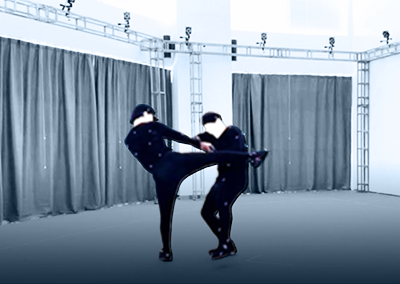
Beyond robotics and engineering, studies using NOKOV motion capture also cover life sciences, virtual reality, and media and entertainment.
Explore Research Papers Using NOKOV Motion Capture
The collection currently includes 1,015 published papers based on research using NOKOV motion capture systems and will continue to be updated.
Researchers can search by research subject, experimental task, or application area to explore how NOKOV motion capture has been used in specific research experiments.
→ View / Download the Research Publication Collection
FAQ
How many published research papers have used NOKOV motion capture systems?
As of September 2026, 1,015 published research papers have used NOKOV motion capture systems, including 617 papers indexed in SCI or EI.
What research fields use NOKOV motion capture systems?
The papers currently collected are primarily in robotics and engineering, including embodied AI, humanoid robotics, teleoperation, soft robotics, medical robotics, underwater robotics, multi-agent cooperative control, motion and path planning, autonomous driving, and intelligent transportation. The collection also includes research in life sciences, virtual reality, and media and entertainment.
What development interfaces does NOKOV motion capture provide for robotics research?
NOKOV motion capture system XINGYING provides an open SDK and supports programming languages including C/C++, Python, and C#, as well as MATLAB and Simulink. It also supports ROS/ROS2, PX4, and ArduPilot; data protocols including MAVLink, VRPN, ZMQ, and OSC; and simulation platforms such as MuJoCo and Isaac Sim.
How can published papers help when evaluating a motion capture system?
Published studies show how a motion capture system is used in actual research experiments, including the research subject, experimental task, collected data, and the system’s role in the experiment. Research teams can review papers related to their own field to understand existing applications and use that information as an additional reference alongside product specifications.



 Room820, China Minmetals Tower, Chaoyang Dist., Beijing
 info@nokov.cn
 + 86-10-64922321