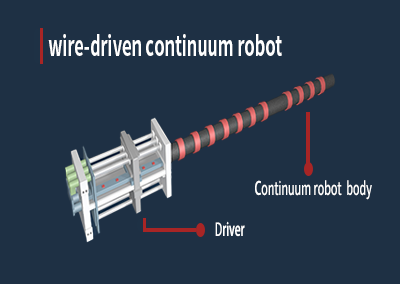
To address the visualization and navigation challenges of minimally invasive instruments in interventional procedures, a research team led by Associate Researcher Huanhuan Liu at the Shenzhen Institutes of Advanced Technology, Chinese Academy of Sciences, published a study in Optics Letters. The researchers proposed a fast and high-accuracy fiber shape sensing method based on a two-layer Long Short-Term Memory network, enabling stable, low-latency, real-time shape reconstruction.
The framework directly maps high-speed Fiber Bragg Grating spectral features to 3D coordinates at multiple points along the fiber. This end-to-end approach reconstructs the fiber shape without explicitly estimating curvature or performing arc-length integration. The system achieved an online output rate of 32 fps, an end-to-end latency of approximately 7.3 ms, and a mean tip error of approximately 2.9 mm.
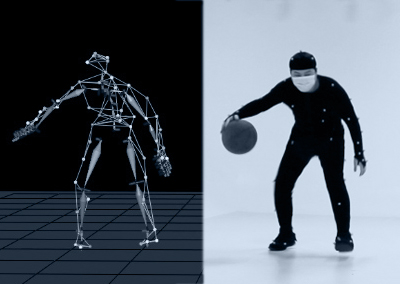
During model training, NOKOV motion capture system measured the high-precision 3D coordinates of markers attached along the fiber. These measurements served as ground truth for supervised learning. The motion capture data were also used to evaluate the model’s reconstruction accuracy and stability across different motion trajectories, rapid direction changes, and continuous operation.



 Room820, China Minmetals Tower, Chaoyang Dist., Beijing
 info@nokov.cn
 + 86-10-64922321