Research Background
Single-medium aerial or underwater robots often suffer from limited maneuverability in cross-medium tasks. To address this challenge, researchers from Prof. Li Wen’s group at Beihang University developed a fully actuated aerial–aquatic robot with thrust vectoring.
Technical Innovation
The proposed robot adopts a thrust-vectoring propulsion architecture, enabling decoupled six-degree-of-freedom (6-DOF) motion control in both aerial and underwater environments. Distinct dynamic models and control strategies were designed for air and water, along with a rapid air–water transition method that does not rely on an accurate dynamic model.
Experimental Validation
The robot was experimentally validated through real-world tests, including fully actuated motion in air and underwater, autonomous air–water transitions, and cross-medium sensor deployment on inclined surfaces.
Measurement and Data Support
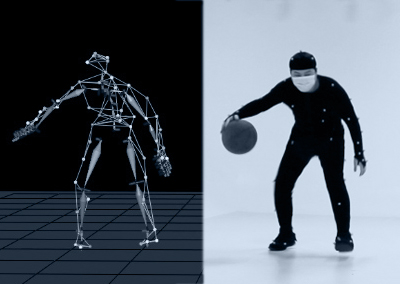
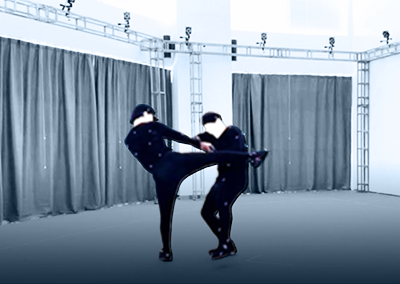
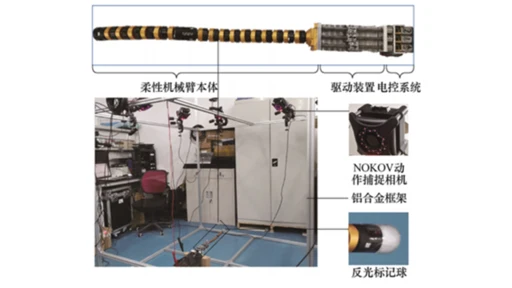
During the experiments, the NOKOV Motion Capture System was used to precisely measure the robot’s position data, providing reliable ground-truth data for motion analysis and control performance evaluation.



 Room820, China Minmetals Tower, Chaoyang Dist., Beijing
 info@nokov.cn
 + 86-10-64922321