Overview
A 2,600 m² large-scale motion capture facility has been deployed by NOKOV to support robotics, UAV, and embodied AI research with high-precision motion tracking and large-volume calibration capabilities.
Applications such as humanoid robotics, embodied AI, UAV testing, and multi-robot coordination require reliable motion tracking across large indoor spaces, along with unified coordinate systems and real-time multi-target tracking.
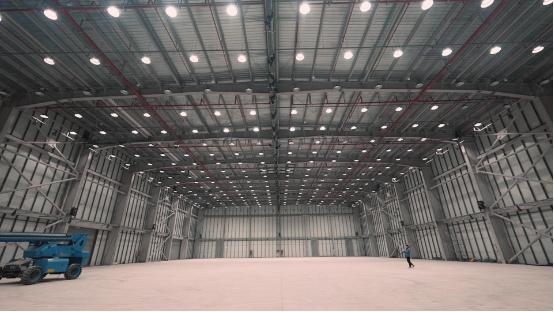
To address these requirements, NOKOV deployed a large-scale optical motion capture system for a robotics research facility operating in a 2,600 m² indoor environment (65 m × 45 m × 12 m), enabling high-precision tracking, large-volume calibration, and real-time multi-target pose estimation.
NOKOV motion capture systems enable unified calibration across complex large-scale environments, including multi-level structures and corridor-connected spaces, with one-shot calibration for extra-large indoor spaces completed within 30 minutes.
This deployment demonstrates how large-scale motion capture can serve as core infrastructure for advanced robotics research environments.
Project Highlights
Item | Specification |
Tracking Area | 2,600 m² |
Dimensions | 65 m × 45 m × 12 m |
Motion Capture Cameras | 300 Mars9H |
Tracking Capability | Multi-target real-time tracking |
Positioning Performance | High-precision motion tracking |
Calibration Capability | Large-volume unified calibration |
Application Areas | UAVs, Humanoid Robots, Embodied AI, Multi-Robot Systems |
Challenge: Scaling Motion Capture to a 2,600 m² Robotics Environment
As robotics experiments scale up, researchers face several key challenges:
How to maintain consistent motion tracking in a 2,600 m² environment?
Large indoor volumes introduce complexity in maintaining stable tracking coverage across the entire space.
How to track multiple robots and UAVs simultaneously?
Modern robotics experiments often involve multiple dynamic agents operating at the same time.
How to ensure unified coordinates across large experimental areas?
Without unified calibration, multi-zone or multi-room environments may suffer from inconsistent tracking data.
These challenges make large-volume motion capture systems essential for robotics research infrastructure.
Solution: Large-Scale Optical Motion Capture System
To address these challenges, a large-scale motion capture system consisting of 300 synchronized cameras was deployed.
The system provides full coverage of a 2,600 m² indoor robotics research environment, enabling real-time tracking of both ground and aerial robotic platforms.
It allows researchers to capture and analyze motion data across the entire facility with consistent spatial reference and synchronized timing.
Large-Scale Motion Capture for Robotics Research
The system supports continuous tracking of multiple robotic platforms, including:
Humanoid robots
UAVs and autonomous aerial vehicles
Multi-robot systems
Human-robot interaction scenarios
By combining data from a distributed camera network, the system enables stable and continuous motion tracking across a large spatial volume.
This allows researchers to focus on algorithm development, control optimization, and system validation rather than localization constraints.
Large-Volume Calibration Across a 2,600 m² Space
A key capability of this 2,600 m² motion capture facility is large-volume calibration, enabling unified tracking across extended indoor environments.
Instead of dividing the facility into independent tracking zones, the system establishes a single coordinate system across the entire 2,600 m² space.
This enables:
Fast Deployment
Large environments can be calibrated in approximately 30 minutes.
Multi-Zone Consistency
Multiple experimental areas share a unified spatial reference.
Continuous Tracking Across Connected Spaces
Robots and UAVs can move across rooms or corridors without losing tracking continuity.
This is essential for large-scale robotics experiments and multi-zone testing scenarios.
Supporting Humanoid Robotics and Embodied AI
The system enables high-quality motion data collection for:
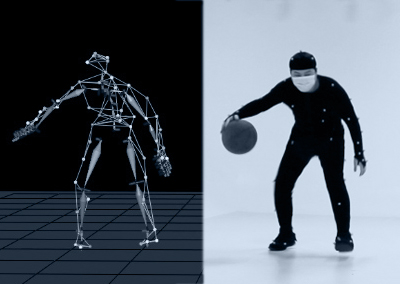
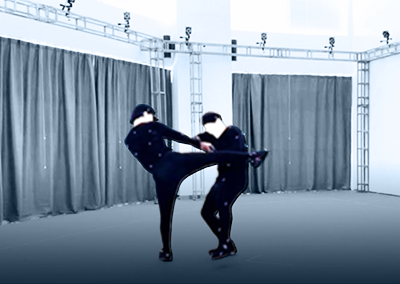
Humanoid robot motion datasets
Imitation learning and training
Whole-body motion analysis
Control system validation
Embodied AI research
Accurate motion trajectories help researchers build scalable datasets for intelligent robot learning systems.
Supporting UAV and Drone Testing
Motion capture is widely used in UAV research environments requiring precise indoor tracking.
The system enables:
UAV trajectory tracking
Autonomous flight validation
Formation flight experiments
Multi-UAV coordination
Air-ground robotic collaboration
Real-time pose feedback provides a controlled environment for testing navigation and flight control algorithms.
Why 2,600 m² Motion Capture Facilities Matter
As robotics systems continue to evolve, experimental environments are shifting toward larger and more integrated research facilities.
Large-scale motion capture systems are becoming foundational infrastructure for:
Robotics research laboratories
Embodied AI platforms
UAV testing environments
Multi-robot systems
Autonomous system validation facilities
These systems provide scalability, spatial consistency, and real-time tracking capability for advanced robotics experimentation.
FAQ
Q1: What is a large-scale motion capture system used for in robotics research?
A1: A large-scale motion capture system is used to provide real-time motion tracking and pose estimation for robots, UAVs, and multi-agent systems in large indoor environments. It is commonly applied in robotics research, UAV testing, and embodied AI data collection.
Q2: Can motion capture systems track multiple robots and UAVs at the same time?
A2: Yes. Large-scale motion capture systems are designed for multi-target tracking, allowing simultaneous real-time tracking of UAVs, humanoid robots, and other autonomous agents.
Q3: How do NOKOV motion capture systems maintain consistent tracking across a 2,600 m²-large-scale robotics environment?
A3: NOKOV motion capture systems use large-volume calibration to establish a unified coordinate system across a 2,600 m² large-scale robotics environment, enabling continuous real-time motion tracking across multiple zones without coordinate drift.
Q4: How is motion capture used in embodied AI and humanoid robot training?
A4: Motion capture systems are used to collect high-quality motion datasets for imitation learning, humanoid robot training, and behavioral analysis in embodied AI research.



 Room820, China Minmetals Tower, Chaoyang Dist., Beijing
 info@nokov.cn
 + 86-10-64922321