Accurate motion measurement for validating floating structure dynamics
Optical motion capture provides high-precision, non-contact measurement of floating structure motion during physical model experiments, supporting numerical model validation and safety analysis in ocean engineering research.
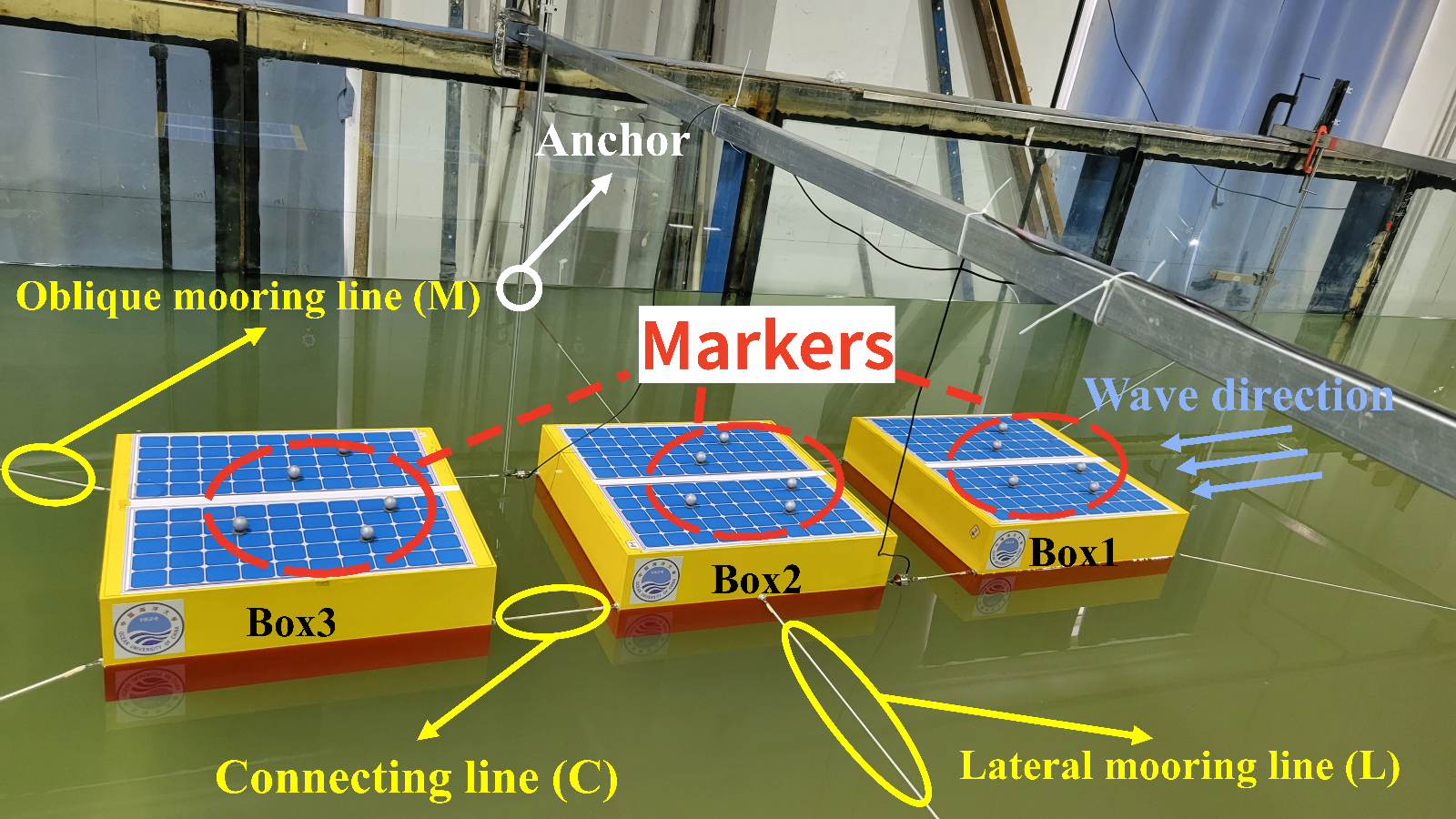
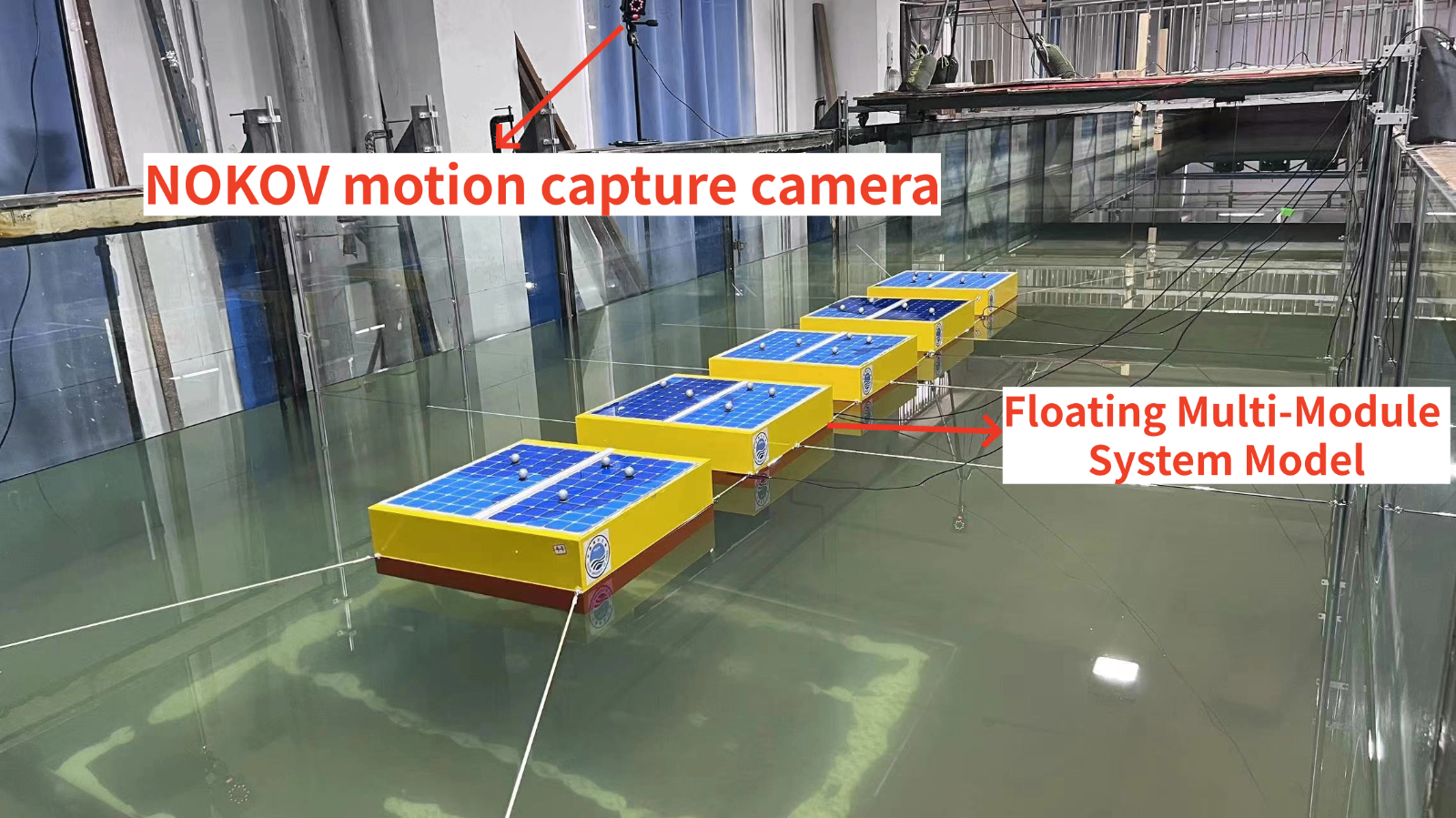
NOKOV optical motion capture was used in a 1:10 scale wave flume experiment at Ocean University of China to record floating module motion. The experimental time series data helped validate simulations of a floating multi-module system under connector failure, supporting safety analysis for modular marine structures such as floating offshore photovoltaic platforms and wave energy systems.
Research: Safety Analysis of Floating Multi-Module Systems under Connector Failure
Floating multi-module (FMM) systems, including floating offshore photovoltaic platforms, wave energy converters, and offshore cities, provide innovative solutions for marine resource utilization. However, under extreme and cyclic loads, connectors between floating modules may fail, potentially affecting the safety and reliability of the entire system.
A research team led by Professor Junfeng Du from the College of Engineering, Ocean University of China, published the paper “Safety Analysis of Floating Multi-Module Systems under Connector Failure” in Engineering Structures. The study investigated the effects of connector failure on the dynamic responses and structural safety of floating multi-module systems.
The research established a numerical model based on 3-D potential flow theory and multi-body dynamic theory. The coupled floating body–connector–mooring system was analyzed using hydrodynamic calculations from MHydro and dynamic simulations in OrcaFlex.
NOKOV Application: Optical Motion Capture for Wave Tank Experiment Validation
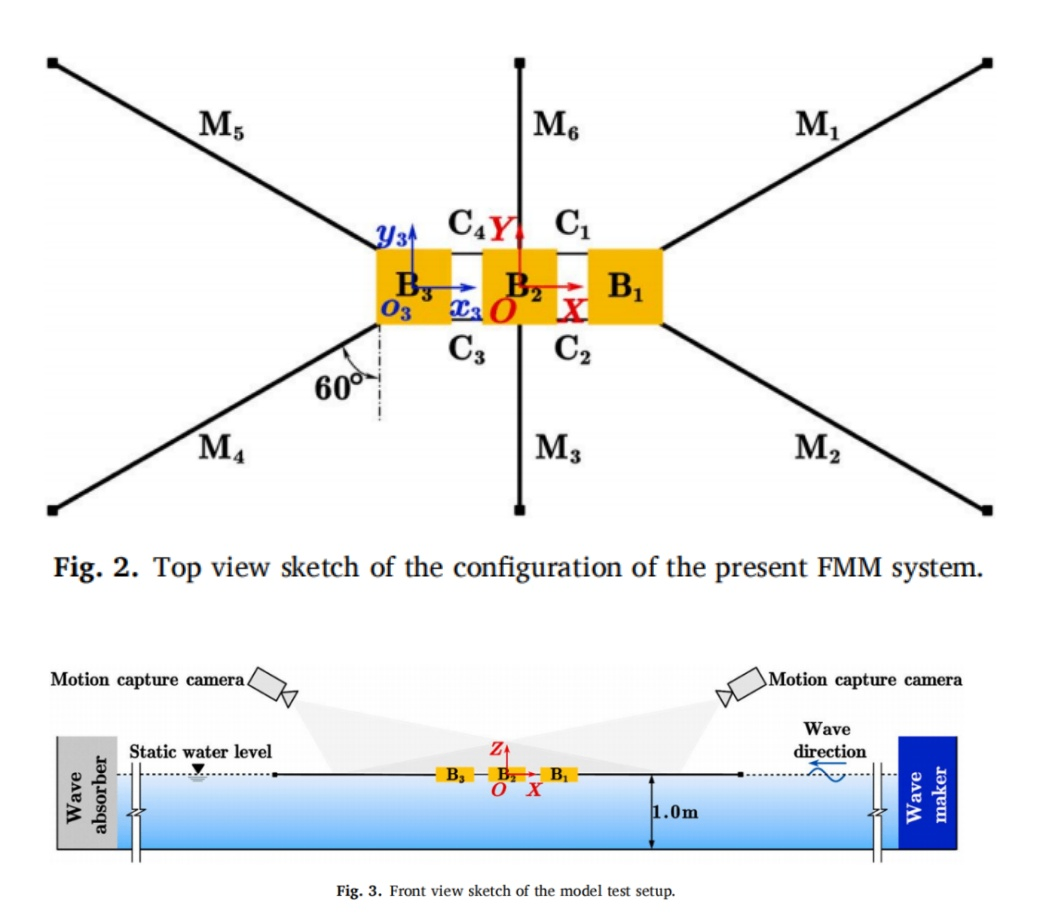
To validate the numerical model, the researchers conducted a 1:10 scale physical model experiment in the wave flume at Ocean University of China according to the Froude similarity criterion.
During the experiment, the NOKOV Optical Motion Capture System was used to capture the motion time series of floating modules. The system provided high-precision measurement data of module movements, supporting the validation of numerical simulations under connector failure conditions.
The non-contact optical tracking capability of NOKOV enabled accurate measurement of floating module motion during dynamic wave conditions, including changes in module position and orientation. These experimental motion data served as reliable references for analyzing the coupled dynamics of the floating body–connector–mooring system.
The experimental results showed good agreement between numerical simulations and physical measurements.
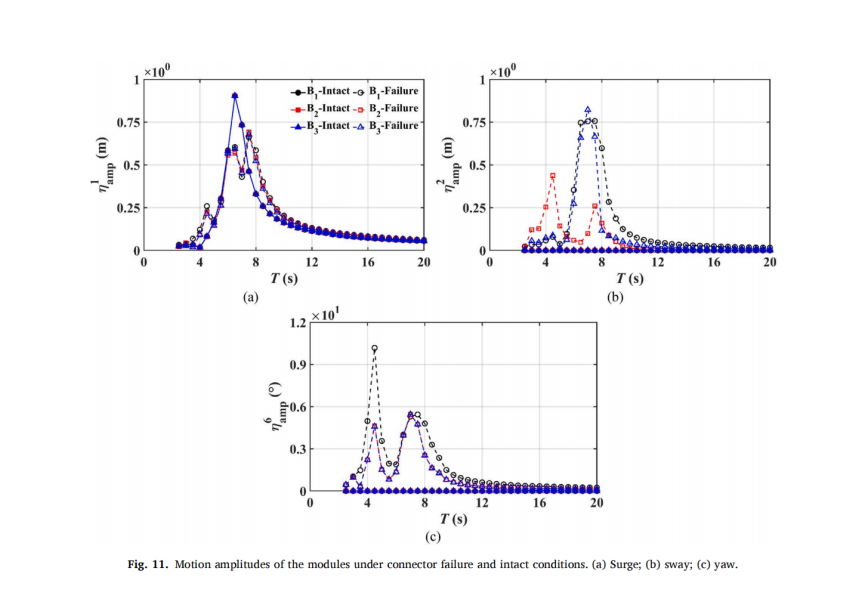
After the failure of the weather-side connector C2, the surge, sway, and yaw motions of the system increased significantly, with the most pronounced responses observed in the weather-side modules. Connector failure also changed the modal characteristics of the system, resulting in multi-peak motion response curves and increased potential resonance risks.
The horizontal motion trajectories of the modules changed from straight-line movements under intact conditions to elliptical and figure-eight (“∞”) patterns after connector failure.
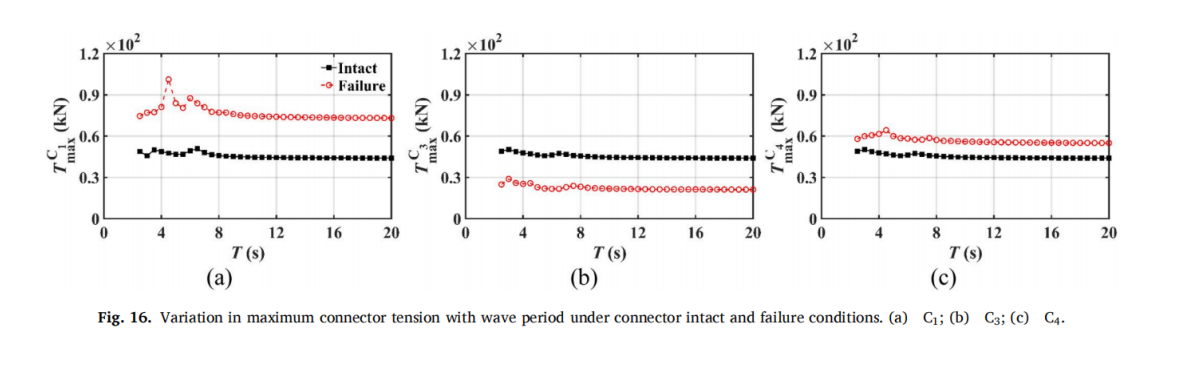
The force analysis showed that the maximum tensions of connectors C1 and C4 increased by 68.2% and 25.4%, respectively. The peak tension of connector C1 reached 2.1 times the intact condition, while the maximum tension of connector C3 decreased by approximately 50.8%. The maximum tension of mooring line M6 increased by 11.8%.
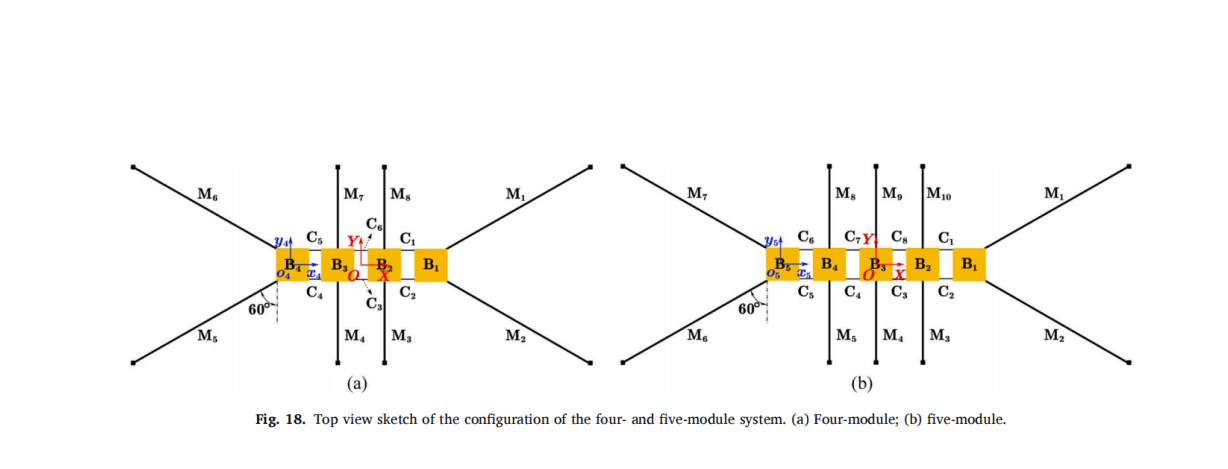
The results of four-module and five-module systems showed similar trends, indicating that connector failure may increase the risk of cascade connector failures in larger floating systems.
Paper: Safety Analysis of Floating Multi-Module Systems under Connector Failure
Click here to explore full NOKOV Applications in Marine & Underwater
Optical motion capture systems can track the position and orientation of physical models during wave tank experiments, providing accurate motion data for structural analysis and numerical model validation.
Yes. Non-contact optical motion capture is suitable for dynamic measurement in physical model tests, including marine structures, offshore engineering, and structural dynamics experiments.
The NOKOV Optical Motion Capture System was used to capture floating module motion data and provide high-precision experimental measurements for validating numerical simulations of connector failure scenarios.




 Room820, China Minmetals Tower, Chaoyang Dist., Beijing
 info@nokov.cn
 + 86-10-64922321