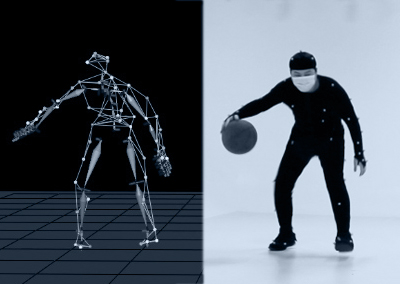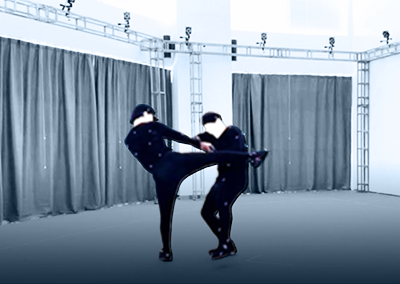
Research teams at Hefei University of Technology, Xidian University, Teesside University, and The Hong Kong Polytechnic University proposed a bioinspired five-DOF origami mechanism and used it to develop an active origami-based robotic spine assistive exoskeleton (OSAE). The system is designed to accommodate human spinal motion and provide assistance during symmetric and asymmetric lifting. Using the NOKOV motion capture system, the researchers collected 3D motion data from participants' upper bodies and compared trunk range of motion in forward bending, lateral bending, and axial rotation with and without the OSAE to validate its motion transparency.
Item | Details |
Research team | Research teams from Hefei University of Technology, Xidian University, Teesside University, and The Hong Kong Polytechnic University |
Paper title | Development of Bioinspired Five-DOF Origami for Robotic Spine Assistive Exoskeleton |
Research object | Active origami-based robotic spine assistive exoskeleton (OSAE) |
Research task | Assistance for symmetric and asymmetric manual material handling and lifting |
Captured object | Participants' upper body; the human-exoskeleton system under the with-OSAE condition |
Output data | 3D motion data of the upper body |
Data use | Comparison of trunk ROM with and without the OSAE to evaluate flexibility and motion transparency |
Key results | No statistically significant differences in forward-bending, lateral-bending, or axial-rotation ROM; significant reductions in LES and TES activity across multiple lifting tasks |
Manual material handling is common in aerospace manufacturing, logistics, construction, agriculture, and other fields. Workers repeatedly bend, twist, and lift, exposing the lumbar spine to substantial compressive and shear forces. Back-support exoskeletons can provide assistive force or torque, but mechanisms with insufficient degrees of freedom may also restrict forward bending, lateral bending, and axial rotation, affecting natural movement and wearer comfort.
The study therefore addressed two questions: whether the exoskeleton could provide assistance across different lifting methods and object weights, and whether the wearer's spine and trunk could retain a near-natural range of motion while the exoskeleton was worn.
Rigid-Flexible Coupled Bioinspired Origami Spine Module
Inspired by origami structures, the research team proposed an origami design with five degrees of freedom: y-axis translation, z-axis translation, x-axis rotation, y-axis rotation, and z-axis rotation. Through mechanical design, the team developed a rigid-flexible coupled bioinspired origami mechanism that mimics the motion and mechanical functions of human vertebrae and intervertebral discs. Seven mechanisms connected in series form a bioinspired spine module that can deform with changes in spinal curvature.
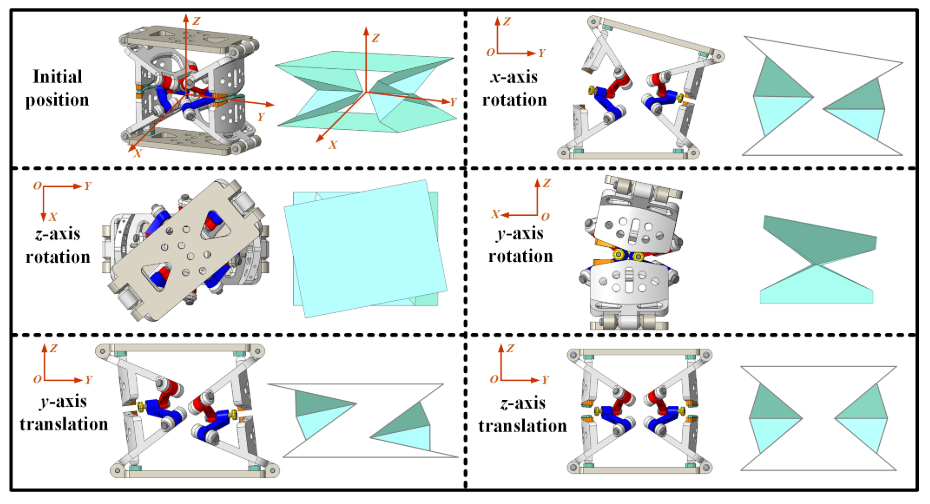
Figure 1. Five DOFs of the designed origami and the rigid-flexible coupled bioinspired origami mechanism.
Cable-Driven Actuation, a Finite-State Machine, and Adaptive Assistance
The OSAE consists mainly of a spine module and a cable-driven module. By pulling the spine module, the cable-driven module mimics the action of the erector spinae muscles. A finite-state machine identifies the exoskeleton's operating state, while an adaptive control strategy adjusts assistance according to the lifting method and object weight. The fabricated OSAE prototype weighs approximately 3.11 kg; the electric motor unit and battery are additional components.
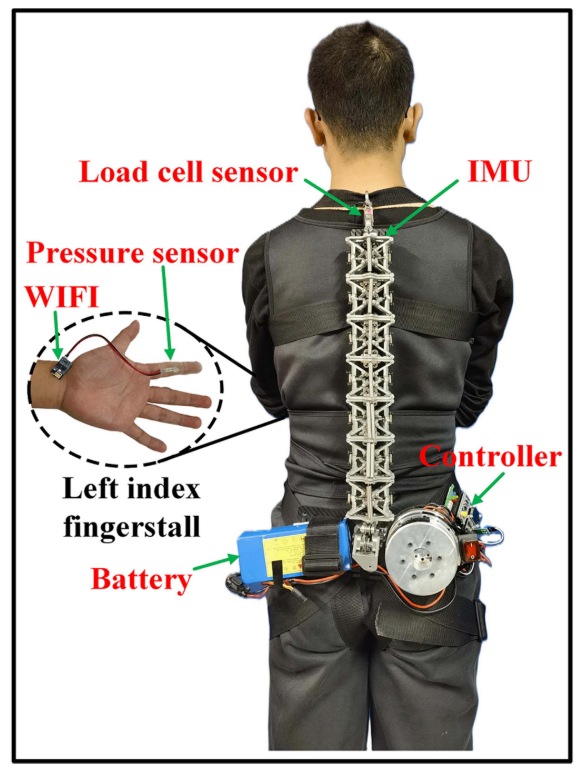
Figure 2. Prototype of the exoskeleton.
Item | Details |
Captured object | Participants' upper body without the OSAE; the human-exoskeleton system under the with-OSAE condition |
Marker arrangement | Reflective markers attached to the upper body without the OSAE and to the human-exoskeleton system with the OSAE |
Output data | 3D motion data of the upper body |
Data use | Calculation and comparison of trunk ROM in forward bending, lateral bending, and axial rotation |
During movement task testing, the researchers used NOKOV motion capture system to collect 3D motion data from participants' upper bodies. In the without-EXO condition, reflective markers were attached to the participants' upper bodies; in the with-EXO condition, they were attached to the human-exoskeleton system. Data collected under both conditions were used to calculate and compare trunk range of motion in forward bending, lateral bending, and axial rotation, indicating whether the OSAE restricted natural movement. In this study, NOKOV motion capture supplied the 3D motion measurements used to evaluate the exoskeleton's motion transparency and its ability to accommodate spinal movement.
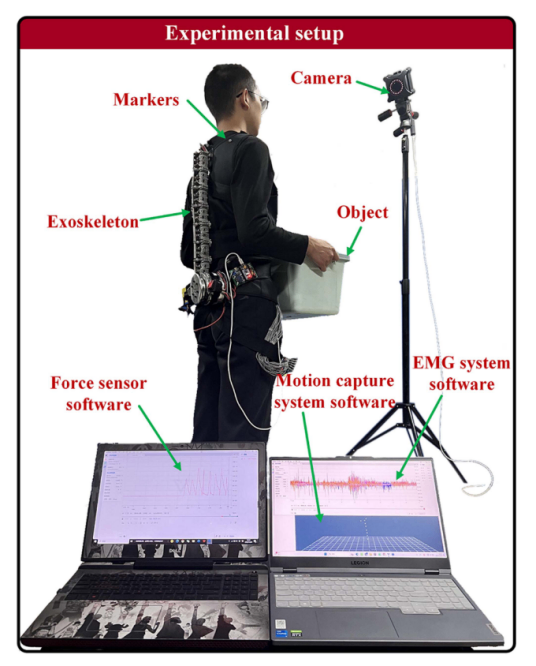
Figure 3. Experimental setup of the experiments.
The researchers recruited 16 healthy participants with no history of back or musculoskeletal disorders. Two experimental conditions were tested: without the OSAE and while wearing the OSAE in its unassisted mode. Participants performed forward bending in the sagittal plane, lateral bending in the coronal plane, and axial rotation in the horizontal plane. Each participant completed 15 trials in each condition. Every trial lasted 2 minutes, with a 5-minute break between consecutive trials; motion data from the final minute of each trial were used for evaluation.
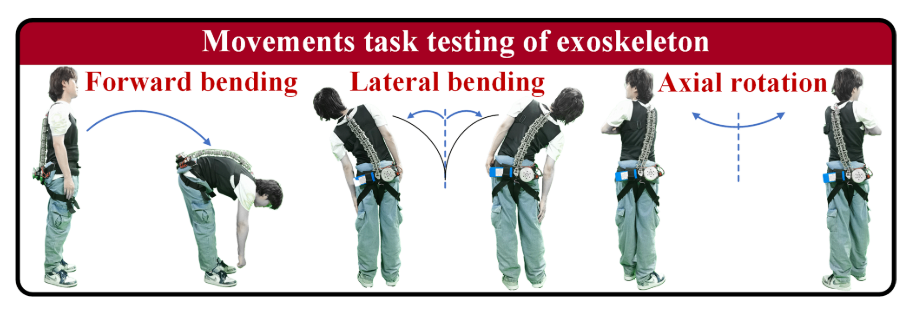
Figure 4. Movements task testing of the OSAE.
The paper reports that trunk ROM during forward bending was (0°, -80.61°) without the OSAE and (0°, -79.10°) with the OSAE. Lateral-bending ROM was (-41.77°, 41.14°) and (-39.05°, 39.51°), respectively, while axial-rotation ROM was (-64.56°, 61.34°) and (-61.43°, 59.55°), respectively.
Compared with the without-EXO condition, forward-bending, lateral-bending, and axial-rotation ROM decreased by 3.06% (P = 0.312), 5.25% (P = 0.513), and 3.91% (P = 0.833), respectively, when participants wore the OSAE. None of the three movements showed a statistically significant difference between conditions. The paper therefore reports that the OSAE is flexible and can accommodate human spinal movement; its conclusion further states that the movement task testing verified the exoskeleton's motion transparency.
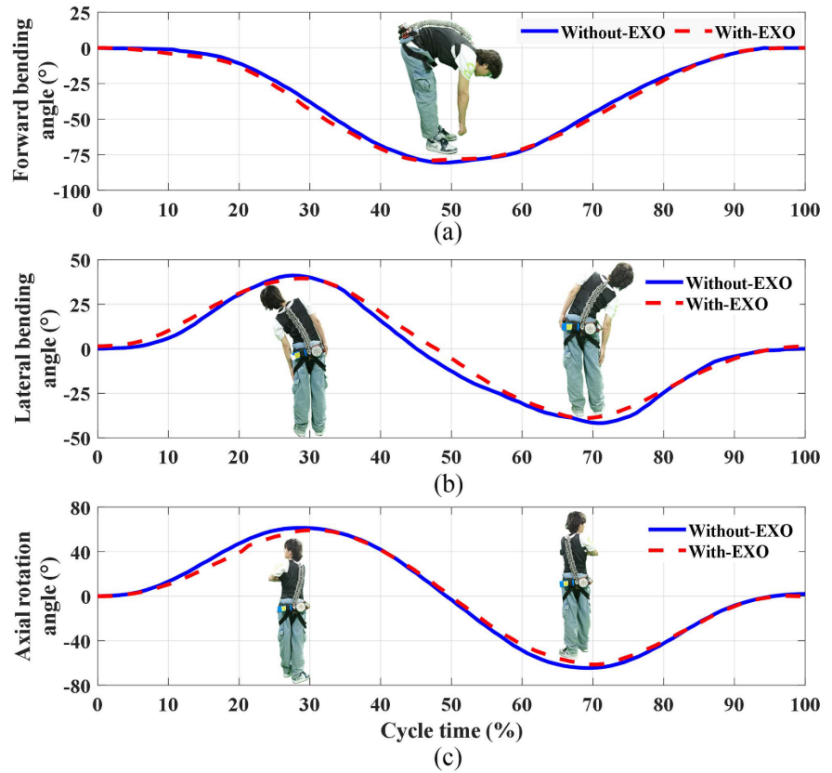
Figure 5. ROMs of the participants' trunk under different conditions. (a) Forward bending. (b) Lateral bending. (c) Axial rotation.
The load-lifting testing compared two conditions: without the OSAE and while wearing the OSAE in its assisted mode. Tasks included symmetric lifting of a 10-kg object, asymmetric lifting of a 10-kg object, and symmetric lifting of 5-kg and 15-kg objects. Each participant completed six trials for each task, with 10 lifting cycles per trial. The evaluation data explicitly reported for this test were collected by a six-channel wireless EMG system at 1000 Hz and were used to analyze the left and right lumbar erector spinae (LES), thoracic erector spinae (TES), and external oblique (EO) muscles. The paper's experimental overview also states that the NOKOV motion capture system collected 3D motion data from participants' upper bodies; the load-lifting results reported here, however, were derived from EMG.
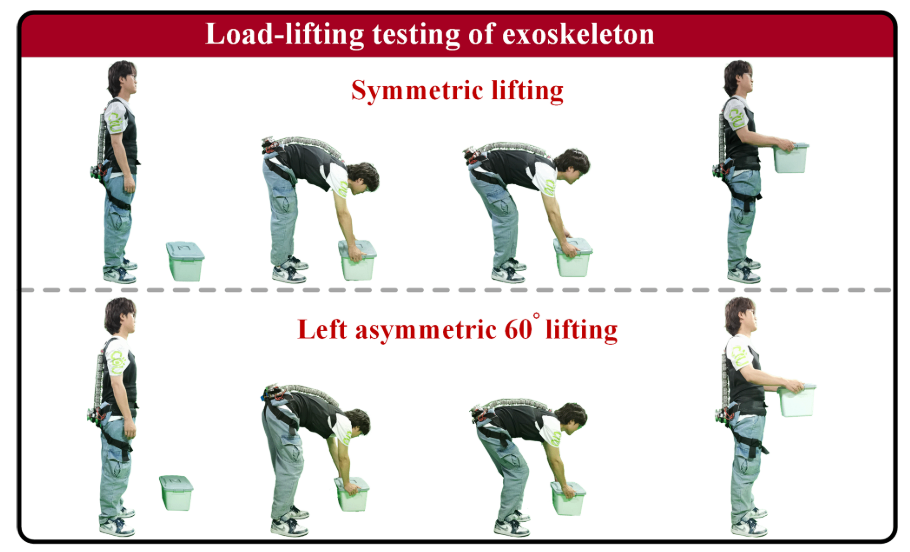
Figure 6. Load-lifting testing of the OSAE.
During symmetric lifting of a 10-kg object, left and right LES activity decreased by 41.54% and 41.02%, respectively, while left and right TES activity decreased by 41.10% and 40.10%; all four differences were statistically significant. The decreases in EO activity were not significant. During asymmetric lifting of a 10-kg object, left and right LES activity decreased by 30.15% and 39.54%, left and right TES activity decreased by 20.97% and 35.79%, and right EO activity decreased by 14.44% (P = 0.008).
Across symmetric lifting of 5-kg, 10-kg, and 15-kg objects, average LES activity decreased by 44.17%, 41.28%, and 38.98%, respectively, while average TES activity decreased by 42.77%, 40.60%, and 38.00%; all of these differences were statistically significant. These muscle-activity results were used to validate the OSAE's lifting-assistance effect and were measured by the EMG system.
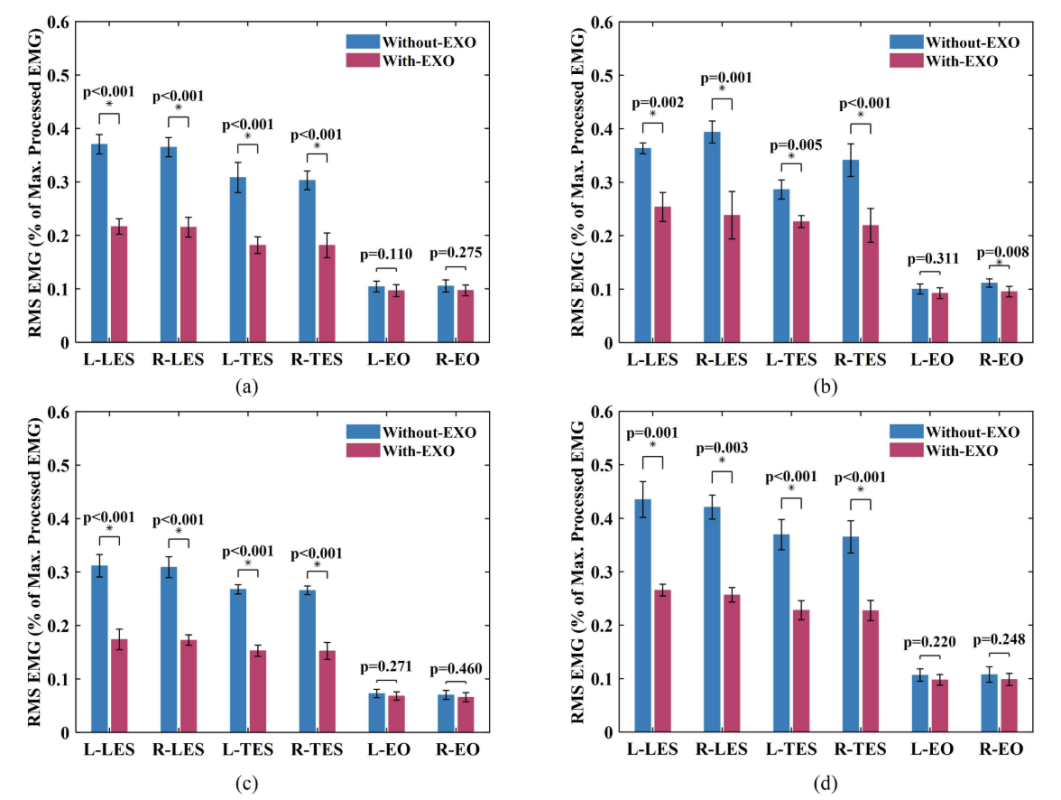
Figure 7. Statistical analysis results of the participants' left and right LESs, TESs, and EOs activities under the two experimental conditions. (a) Symmetric lifting of the 10-kg object. (b) Asymmetric lifting of the 10-kg object. (c) Symmetric lifting of the 5-kg object. (d) Symmetric lifting of the 15-kg object.
The study completed the OSAE prototype design and evaluated motion transparency and assistive performance through movement task testing and load-lifting testing, respectively. The results support that the OSAE can reduce LES and TES activity across multiple lifting tasks without significantly restricting trunk forward bending, lateral bending, or axial rotation.
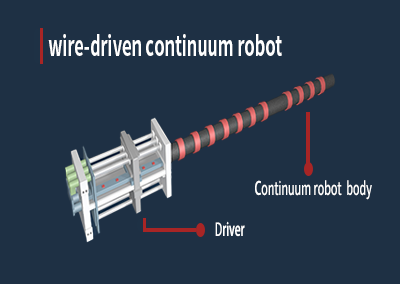
The paper identifies the OSAE as a potential solution for work involving symmetric and asymmetric manual material handling. It also notes that the proposed five-DOF origami could be applied to high-load robots, continuum robots, and parallel robots. The study was based on short-duration experiments with healthy participants; it did not evaluate long-term wear over periods such as six months or one year, nor did it demonstrate a reduction in back-injury incidence in real industrial environments.
Item | Information |
Title | Development of Bioinspired Five-DOF Origami for Robotic Spine Assistive Exoskeleton |
Authors | Bing Chen, Xiang Ni, Lei Zhou, Bin Zi, Eric Li, Dan Zhang |
Journal | IEEE Transactions on Robotics |
Volume and pages | Vol. 41, 2025, pp. 3317-3334 |
DOI | 10.1109/TRO.2025.3567530 |
Original paper | View the original paper |
What did the NOKOV motion capture system measure in this study?
The measured object was the participants' upper body. Under the with-OSAE condition, reflective markers were attached to the human-exoskeleton system. The system collected 3D motion data of the upper body.
How were the 3D motion data used to validate the OSAE?
The researchers used the data to calculate trunk range of motion in forward bending, lateral bending, and axial rotation, then compared the with-OSAE and without-OSAE conditions to determine whether the exoskeleton restricted natural movement.
Did the NOKOV motion capture system participate in the OSAE's closed-loop control?
The paper does not state that it did. The OSAE uses its own sensing and control system; the motion-capture data were used in the paper for experimental evaluation of the movement task testing.
Which equipment measured the reductions in muscle activity reported in the paper?
Those results came from a six-channel wireless EMG system. NOKOV motion capture system was used for 3D motion measurement and trunk ROM evaluation; it should not be described as the source of the EMG results.
Did the study demonstrate that the OSAE can reduce back injuries over the long term?
No. The paper reports short-duration experiments with healthy participants and presents reducing back injuries as a potential application. The effects of long-term wear require further study.



 Room820, China Minmetals Tower, Chaoyang Dist., Beijing
 info@nokov.cn
 + 86-10-64922321